

Class
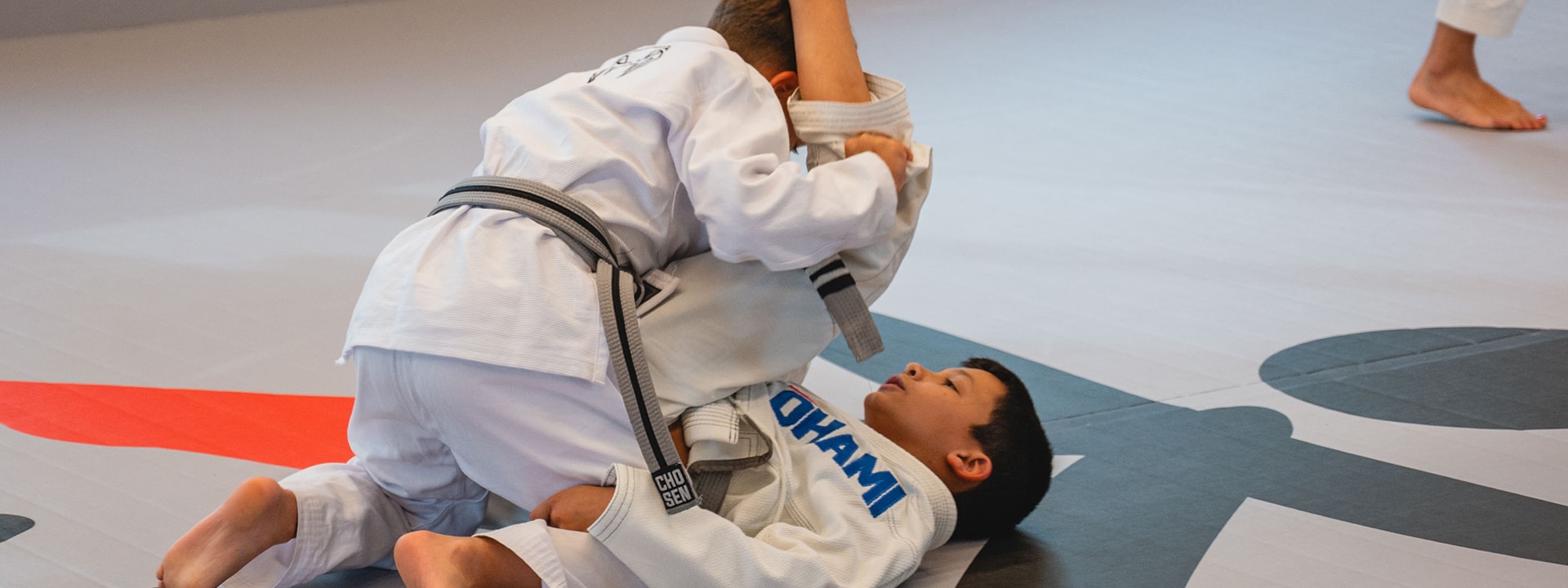
BRAZILIAN JIU-JITSU FOR KIDS 8-12
At this age, Brazilian Jiu-Jitsu helps children develop both physical and mental skills. Training combines technical instruction, physical conditioning, and the basic principles of self-defense within a structured and safe learning environment.
At the same time, students cultivate self-control, focus, and perseverance, learning to face challenges with patience and confidence. Jiu-Jitsu becomes a valuable tool for personal growth, strengthening responsibility, teamwork, and respect for others.

Classes & Hours
CLASS SCHEDULE
MONDAY
- 11:00-12:00 Adults Class
-
17:00-18:00
Kids Competition Class
(ages 6-8) -
18:10-19:10
Kids Competition Class
(ages 8-12) - 19:15-20:45 Adults Class
TUESDAY
- 11:00-12:00 –
-
17:10-18:00
Pre-K Class
(ages 4-5) -
18:10-19:10
Beginners Class
(ages 8-12) - 19:15-20:45 Adults Class
WEDNESDAY
- 11:00-12:00 Adults Class
-
17:00-18:00
Kids Competition Class
(ages 6-8) -
18:10-19:10
Kids Competition Class
(ages 8-12) - 19:15-20:45 Adults Class
THURSDAY
- 11:00-12:00 –
-
17:10-18:00
Pre-K Class
(ages 4-5) -
18:10-19:10
Beginners Class
(ages 8-12) - 19:15-20:45 Adults Class
FRIDAY
- 11:00-12:00 Adults Class
-
17:00-18:00
Kids Competition Class
(ages 6-8) -
18:10-19:10
Kids Competition Class
(ages 8-12) - 19:15-20:45 Adults Class
SATURDAY
- 11:00-12:00 Adults No-Gi Open Mat

FAQ
FREQUENTLY ASKED QUESTIONS

-
1. Do I need to be in good physical condition to start?
No. Brazilian Jiu-Jitsu (BJJ) is an excellent way to improve your fitness. Training gradually enhances endurance, strength, and flexibility.
-
2. Is it a dangerous sport?
Like any combat sport, BJJ carries some level of risk. However, it is considered one of the safest martial arts, as it does not involve striking. The emphasis is placed on control and technique. Tapping out is the golden rule of safety: as soon as you feel excessive pressure, you lightly tap your training partner or the mat, and the action stops immediately.
-
3. At what age can children start?
We welcome children from the age of 4. Our kids’ classes focus on discipline, coordination, and confidence.
-
4. What equipment do I need for my first class?
For your first trial class, comfortable athletic clothing is enough (for example, sweatpants or shorts without zippers). If you decide to continue:
- Gi: The traditional uniform.
- No-Gi Apparel: Rashguard and shorts.
- Protective Gear: A mouthguard is recommended, and sometimes knee pads for maximum safety.
-
5. What is the difference between Gi and No-Gi?
- Gi: Training with the traditional uniform (kimono). Grips on the uniform are allowed, requiring greater strategy and technical precision.
- No-Gi: Training with athletic wear (shorts and rashguard). The pace is faster and focuses more on body control and movement.
-
6. How does the belt system work?
Progress begins with the White Belt and continues through Blue, Purple, Brown, and Black Belt. Along the way, the instructor awards “stripes” on the belt as a sign of progress. Achieving a Black Belt typically requires 10–15 years of dedicated training.
-
7. Is it an officially recognized sport in Greece?
Yes. Our academy is affiliated with the Hellenic Ju-Jitsu Federation (E.F.E.O.Z.Z.), the official governing body recognized by the General Secretariat of Sports in Greece.